
“The future of engineering depends on the diversity of thought and experience. By building more inclusive spaces, we ensure that the next generation is not only more innovative but also more resilient and ready to face global challenges.”
As a STEM advocate, I’ve had the privilege of working with many young women who aspire to enter technical fields. It’s inspiring to witness their curiosity and passion, but it’s also clear that while we’ve made strides toward gender diversity in engineering, there’s still a long way to go. In a field that thrives on innovation, we can’t afford to overlook the importance of inclusivity. The future of engineering depends on creating spaces where women feel supported, empowered, and encouraged to contribute.
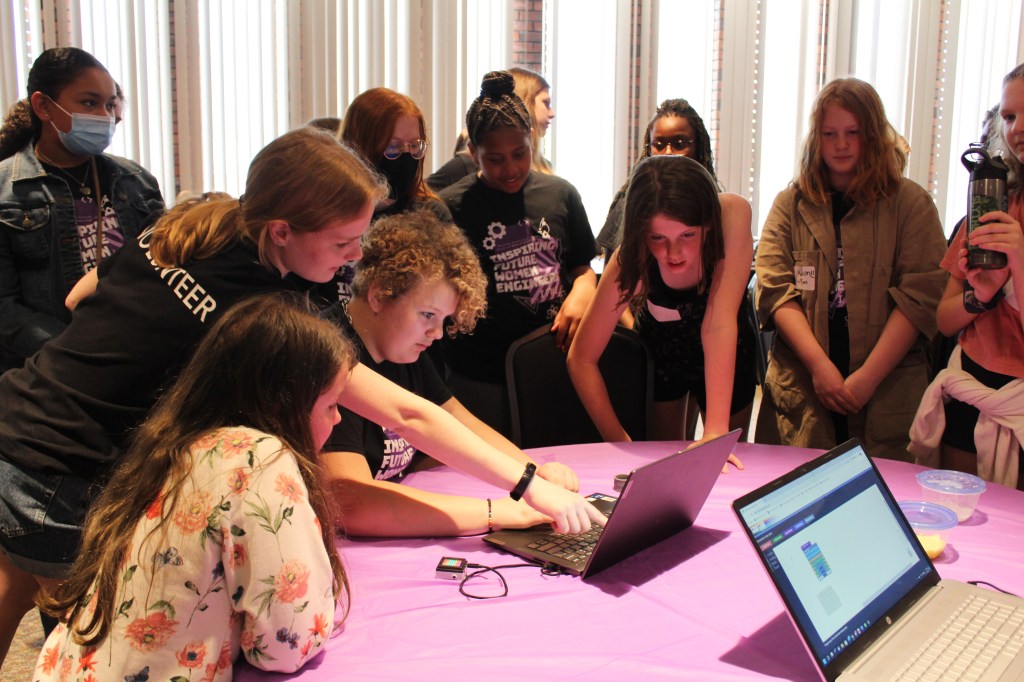
One of the most rewarding experiences I’ve had was organizing and leading the Inspiring Future Women Engineers (IFWE) Workshop for the Society of Women Engineers. IFWE was a day-long STEM camp designed for 6th-grade girls to explore engineering in a fun, interactive way. We hosted activities like the Marshmallow Challenge and the Mousetrap Car project, giving the girls a hands-on experience of what engineering can look like. At the same time, we provided parents with resources on how to support their daughters in pursuing STEM careers.
The feedback we received was incredible. Many of the girls left excited about the possibilities of engineering, and the parents were grateful for the guidance on how to encourage their daughters in a field that still feels male-dominated. Seeing these young women so engaged reaffirmed my belief that creating inclusive, supportive spaces is crucial for fostering the next generation of engineers.
The Current Landscape of Women in STEM
Despite progress, women still face significant barriers in STEM fields. According to recent statistics, women make up only about 28% of the workforce in science, technology, engineering, and math. In engineering specifically, that number is even lower. Women who do enter these fields often face challenges like gender bias, lack of mentorship, and fewer opportunities for advancement. These challenges are real, but they’re not insurmountable.
What’s encouraging is that we’re seeing more initiatives designed to break down these barriers. Organizations like discoverE and SWENext are creating platforms where young girls can get involved in STEM from an early age, and they’re providing essential resources for both students and parents. DiscoverE, for example, offers a range of programs that introduce kids to engineering in ways that are both engaging and accessible. SWENext provides mentorship and community support for young women interested in STEM, giving them role models to look up to as they navigate their educational and career paths.
Creating Inclusive Spaces in Engineering
The key to closing the gender gap in STEM is to create environments where women feel included and empowered to succeed. This doesn’t happen by accident—it requires deliberate effort from organizations, universities, and industry leaders. Mentorship is one of the most effective ways to foster inclusion. Programs like SWENext and discoverE do a fantastic job of providing mentors for young women, but we need more of these opportunities at every level of education and beyond.
It’s also important for organizations to create networking opportunities specifically for women in engineering. During my time at Kettering University, I helped organize initiatives like the Lives Improve Through Engineering and Science (LITES) program, which gives high school girls the opportunity to explore careers in STEM through hands-on experiences and mentorship. Programs like LITES not only introduce young women to the possibilities of engineering but also provide them with a network of peers and mentors who can support them as they pursue their goals. These kinds of initiatives create a sense of belonging early on, which is crucial for retaining women in STEM fields as they transition from education to the workforce.
But mentorship and networking are only part of the solution. Companies and universities must also commit to policies that promote diversity and inclusion. This includes everything from hiring practices that address unconscious bias to creating flexible work environments that support work-life balance—something that disproportionately affects women in STEM careers.
The Road Ahead
The future of engineering depends on the diversity of thought and experience. By building more inclusive spaces, we ensure that the next generation of engineers is not only more innovative but also more resilient and ready to face global challenges. We must continue to create pathways for young women to thrive in STEM by supporting them through mentorship, providing networking opportunities, and fostering inclusive environments in both education and the workplace.
If we can do that, I’m confident that the future of engineering will be brighter and more innovative than ever before.






 Olivia N. Wright
Leave a comment